Ecommerce competitor analysis without losing your mind
By Manu Santana Founder of Nexprix · Meet the teamIn 30 secondsCompetitor analysis gets out of hand when you try to track everything. The useful rule is three caps: a maximum of two hours a week, a maximum of ten competitors, and a maximum of five dimensions. The five dimensions that matter are prices on shared SKUs (daily for your hero products, weekly for the rest, automated), active promotions (weekly), new catalog and discontinuations (every two weeks), messaging and key claims (monthly), and SEO plus advertising (monthly with Semrush or Sistrix). The most common mistake is watching someone who isn't your real competitor: your real competitor is the one that shows up on page one of Google Shopping for your key term, not the one with a similar brand name. Every block should end with a single question: what operational change do I make in the next seven days? If the answer is "none," the analysis was informative, not actionable, and you don't repeat it until there's a reason to look again.
Competitor analysis gets out of hand when you try to track everything. The useful rule: a maximum of 2 hours a week, a maximum of 10 competitors, a maximum of 5 dimensions.
The 5 dimensions that matter
- Prices on the SKUs they share with you (key for daily pricing)
- Active promotions and discount calendar (anticipates Black Friday and sales)
- New catalog: which references they add and which they pull (a signal of demand and turnover)
- Messaging: key claims, campaign angle, what they highlight on the homepage
- SEO and advertising: which keywords they rank first for, which ads they run
The right frequency per dimension
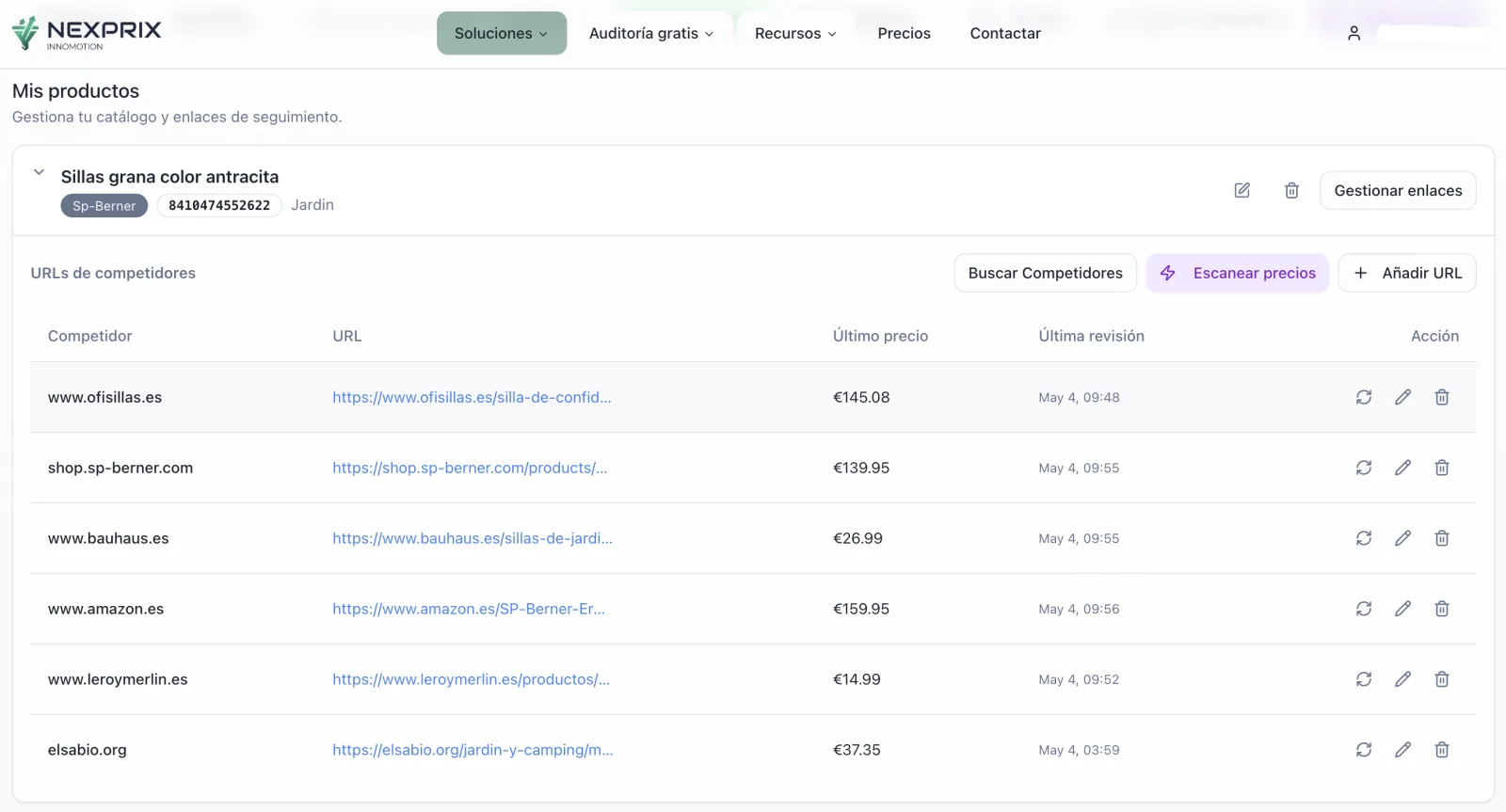
- Prices: daily for hero SKUs, weekly for the rest (automate it, don't do it manually)
- Promotions: weekly
- Catalog: every two weeks
- Messaging: monthly
- SEO and advertising: monthly with a tool like Semrush or Sistrix
The most common mistake: watching someone who isn't your real competitor
Your real competitor is the one that shows up on page 1 of Google Shopping for your key term, not the one with a similar brand name or the one selling in a different segment. Watching irrelevant competitors takes the same time as watching the real ones and adds nothing.
- A list of 10 competitors: that's the maximum. More is noise
- Refresh the list every quarter — competitors change
- If in 3 months you haven't acted on a competitor's data, drop them from the list
How to turn analysis into a decision
Every analysis block ends with a single question: what operational change do I make in the next 7 days? If the answer is "none," the analysis was informative, not actionable. That's fine — but you don't repeat it until there's a reason to look again.
Competitor analysis works like security surveillance: 80% of the time nothing happens. Its purpose is to be ready when something does.
Sources
Frequently asked questions
What tools do you need?
For prices: Nexprix Radar, Prisync, or another. For SEO: Semrush, Sistrix, Ahrefs. For advertising: Meta Ads Library and ad-spying tools. For promotions and catalog: a weekly visit to the competitor's site.
How many hours should I spend?
A commerce manager should only spend 2 hours a week on competitor analysis. If you spend more, automate. If you spend less, make sure those 2 hours give you the clarity to make decisions.
What if the sector changes very fast?
In fast-changing sectors (fashion, tech), the dimensions stay the same but the frequency goes up — messaging analysis every two weeks, not monthly. The structure doesn't change, only the cadence.