Amazon's pricing strategy applied to your store
By Manu Santana Founder of Nexprix · Meet the teamIn 30 secondsAmazon adjusts prices between two and five times a day per SKU using thousands of machines. A €1M-20M ecommerce doesn't need that power, but it does need to decide which parts of that strategy to replicate. What you do copy: continuous price monitoring on key SKUs, clear adjustment rules ("if they drop more than X%, I match up to Y%"), history to learn seasonality, and differentiation between hero SKUs (defend position) and the rest of the catalog (defend margin). What you don't need: hourly changes without human supervision, complex predictive algorithms or per-user personalized pricing (a gray area in Europe). The minimum viable system is three pieces: continuous price visibility at least daily, per-SKU rules deciding whether to defend price or position, and a human review every morning of alerts with batch execution. Automate more only when the manual process has been stable for six months; doing otherwise amplifies the mistakes.
Amazon adjusts prices between 2 and 5 times a day per SKU. It does it with thousands of machines. Your €1M-20M ecommerce doesn't need that power — but it does need to ask which parts of that strategy make sense to replicate.
What Amazon does that you can copy
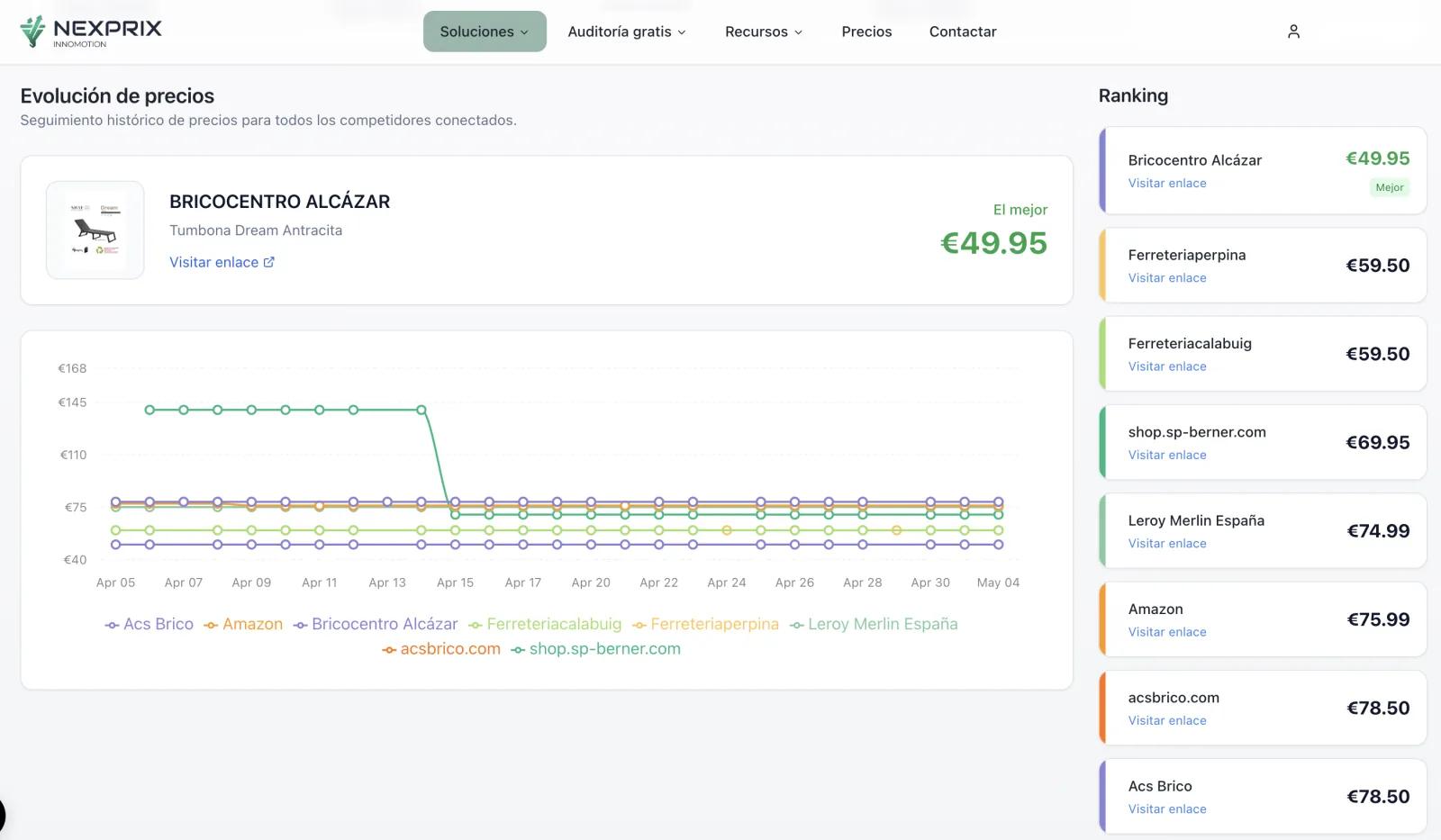
- Continuous monitoring of competitor prices on key SKUs
- Adjustment rules: "if they drop more than X%, I match up to Y%"
- Price history: learning the seasonality and elasticity of each SKU
- Differentiation between hero SKUs (defend position) and the rest of the catalog (defend margin)
What Amazon does that you don't need
- Hourly automated changes without human supervision
- Predictive algorithms based on machine learning with thousands of variables
- Per-user personalized pricing (legally and reputationally risky in Europe)
The minimum viable system
To get started you don't need algorithms. You need three things: continuous visibility of competitor prices, clear rules for what to do with each move, and a weekly human review process.
- Visibility: a tool that shows you updated prices at least once a day
- Rules: per SKU, decide whether you defend price or position. Define the threshold ("if I lose position 1 to Carrefour, I match within 24h")
- Process: one person on the team reviews alerts every morning, decides which changes to apply and executes them in a batch
When to automate more
Only once the manual process is already stabilized. If you don't have the weekly process working, adding automation only amplifies the mistakes. The practical rule: 6 months of manual pricing with history, then you automate low-risk decisions (matching the price on non-hero SKUs) and leave the high-risk ones (defend or attack) manual.
The goal isn't to compete with Amazon on speed. It's to not lose sales because you found out too late that the market moved. That gap is covered with automated monitoring and clear rules, not sophisticated algorithms.
Sources
- Shopify
Dynamic Pricing: Definition and Strategies - Think with Google
Marketing Automation
Frequently asked questions
How many SKUs should be under dynamic pricing?
The 20% that drives 80% of the revenue. For the rest, monthly manual adjustments are enough.
Is dynamic pricing legal in Spain?
Yes, as long as there's no personal price discrimination. Changing the price based on time, demand or competition is legal. Changing it based on the user who lands on the page is a gray area in Europe.
What tools are there to get started?
For monitoring prices: any price-tracking tool (Nexprix Radar among them). To execute automatic changes: either you build it with your team connecting to Shopify/PrestaShop, or you use dedicated platforms like Prisync or Omnia.